


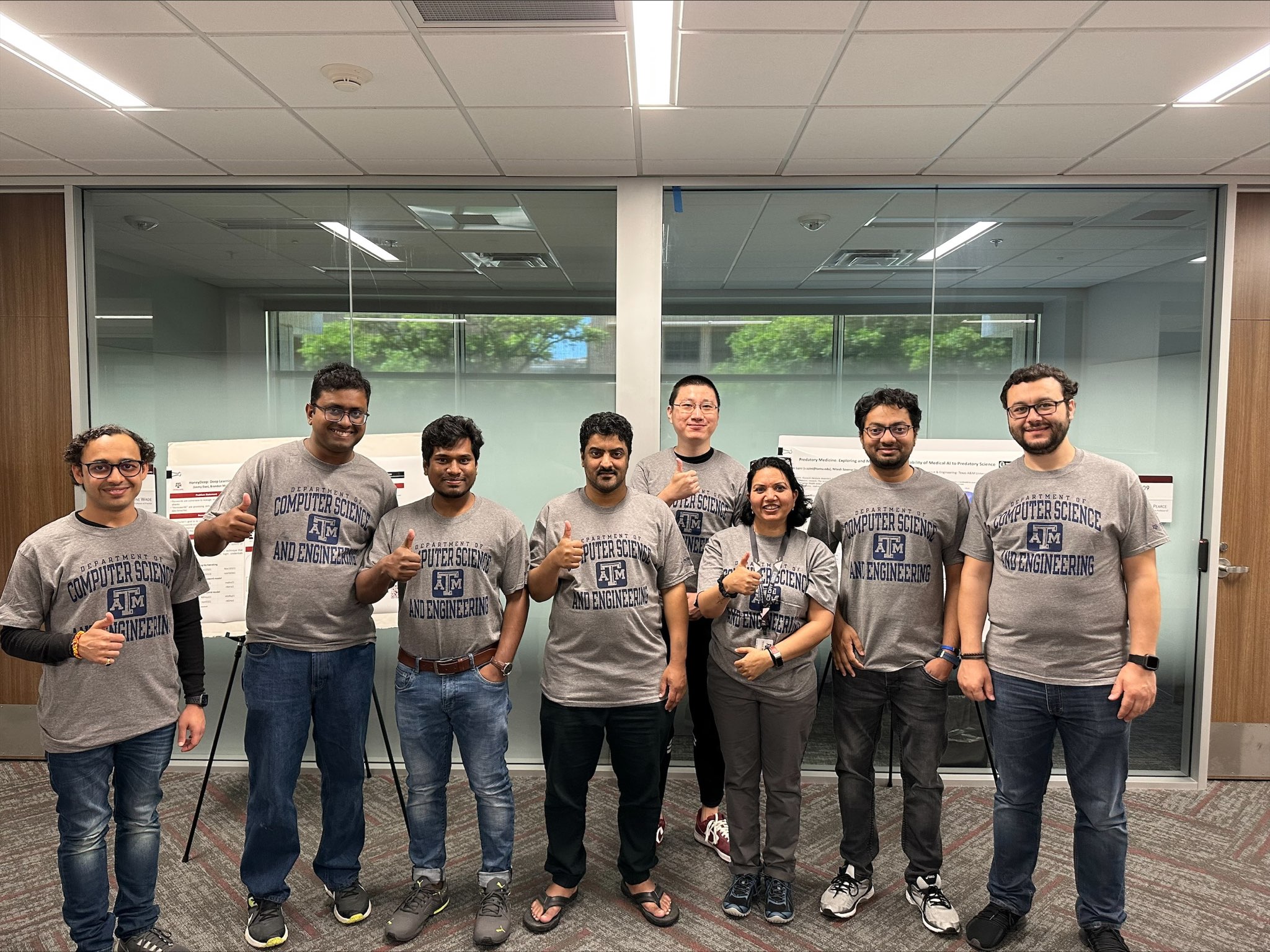

The SPIES research lab, led by Prof. Nitesh Saxena, in the Department of Computer Science and Engineering at the Texas A&M University (A&M/TAMU) conducts research on multitude of topics related to the security and privacy of intelligent emerging systems or paradigms. A computing and networking system is considered “intelligent,” broadly speaking, if it has some level of human-like or human-extending decision making capability, allowing it to operate partially or fully autonomously. It is considered “emerging” if it has already started getting deployed in the real-world (albeit not to its fullest capacity), or is deemed promising for a wide-scale deployment in the near future. The security and privacy issues surrounding such intelligent emerging systems, however, may create societal problems, prevent end users from utilizing their full potential, or, even worse, may rule out the chances of their deployment in the future. Currently, these intelligent emerging systems range from mobile/wireless networks and cyber-physical systems (such as those involving AR/VR, smartphones, wearables, IoT, 5G/6G, and more) to the Internet class of systems (such as the web, online social networks, and more), all of which have some level of adoption of artificial intelligence or agentic ability.
The goal of the SPIES lab is to investigate and improve the security of intelligent emerging systems, to say in short. With this goal in mind, the lab is currently running many broadly-scoped projects centered around the following thematic areas:

- AI Security and Privacy: security and privacy of AI/ML systems, including Large Language Models, voice and multimodal AI, and autonomous agents (including financial trading); and AI-driven approaches to strengthening security and privacy across the lab’s research thrusts.
- Human-in-the-Loop Security: secure association of wireless devices, end-to-end encryption security, user authentication, including voice authentication, two-factor low-effort authentication, and behavioral biometrics, neuro-inspired/neurosecurity or cognitive security, accessible security & security for vulnerable populations, and extrinsically motivated or playful security.
- Mobile and Cyber-Physical System Security: security for AR/VR devices, smartphones, wearables, smarthome, brain computer interfaces (BCI), medical devices, RFID/NFC devices, election systems, 5G/6G systems and marine and space cyber-physical systems.
- Fault-Tolerant Distributed Security and Cryptographic Services: secure storage in the cloud, secure multi-party computation, password management and multi-factor authentication.
- Privacy and Anonymity: side channel attacks/defenses, web privacy, online tracking, and online social network privacy.
SPIES is supported by grants, awards and gifts from NSF (multiple grants and multiple programs, including SaTC, CICI, CyberAI and SFS), DOD, NSA, NIJ/DoJ, Google (2 Faculty Research Awards), Comcast, Cisco, Microsoft Research, MxD, Intel, Nokia, and Research in Motion. The SPIES researchers consistently publish in top-tier conferences and journals in Computer Science, and lab’s research is routinely covered in mainstream national and international news media. The lab graduates can be found spying around in the premises of major software and research organizations (earning big bucks :-)) and top academic institutions in the US and worldwide (earning peanuts :-(). The SPIES affiliates like to go by the tag line, “Spying for a Safer World.”
SPIES lab does not do research in isolation. The research conducted at the lab is very closely integrated with cybersecurity education and workforce development, which has led to world-class, award-winning MS degree programs and scholarship for service programs in cybersecurity.