
SleepFormer: A Lightweight Rhythm-Aware Framework for Sleep Stage Classification
Komal Ilyas, Nitesh Saxena, Irfan Khan
In IEEE EMBS International Conference on Biomedical and Health Informatics (BHI), 2026
News
SPIES Lab Student Named Future Faculty Fellow (F3)
Congratulations to SPIES Lab Ph.D. student Md Mojibur Rahman Redoy Akanda (Akanda) again on being selected as a recipient of the 2026–2027 Mobil Aggies Future Faculty Fellowship (F3) at Texas A&M University!
Texas A&M has officially announced the 2026–2027 F3 Fellows, with only five doctoral candidates selected across the university. This competitive fellowship recognizes doctoral students who have demonstrated excellence in research, teaching, and mentorship and prepares them for successful careers in academia.
Each of these students has distinguished themselves through outstanding scholarship and a commitment to teaching and mentoring others.
— Dr. Charles Criscione, Associate Dean, Graduate and Professional School, and Director of the F3 Program
Akanda is a Ph.D. candidate in Computer Science and Engineering under the supervision of Dr. Nitesh Saxena. His research focuses on cybersecurity and privacy, particularly securing emerging technologies and addressing security and privacy risks arising from accessibility barriers for diverse users. He also investigates security and privacy risks associated with emerging technologies, including augmented and virtual reality platforms.
The F3 program provides one year of support along with faculty mentorship, professional development, and structured preparation for the academic job market.
Congratulations to Akanda on this university-wide recognition!
Read the official Texas A&M announcement:
https://inside.provost.tamu.edu/story/five-doctoral-candidates-named-2026-2027-mobil-aggies-future-faculty-fellows/
Learn more about Akanda’s research:
https://redoyakanda.github.io/
#TexasAandM #Cybersecurity #Accessibility #FutureFaculty #SPIESLab #UsableSecurity
2 Papers Accepted to ISC 2026
- Stress Testing Social Media Authentication Ceremonies of End-to-End Encrypted Messaging with Ephemeral Fake Accounts
Mashari Alatawi, Md Shahidur Rahaman and Nitesh Saxena
In 29th Information Security Conference (ISC), September 2026.
- You Can’t Spot a Deepfake—And Neither Can Your Brain Nor Eyes: A Neurophysiological Framework for Deepfake Exploitation of Cognitive Engagement and Implicit Visual Evaluation
Cagri Arisoy, Md Imanul Huq, Amy Hays and Nitesh Saxena
In 29th Information Security Conference (ISC), September 2026.
Paper accepted to WiSec 2026
TrackAR: AR/VR Device Fingerprinting and User-Device Pairing Detection via Shared Motion Sensor Data
Tanvir Ahmed Mahdad, Md Shahidur Rahman and Nitesh Saxena
In the 19th ACM Conference on Security and Privacy in Wireless and Mobile Networks (WiSec), June-July 2026.

Paper accepted to EACL 2026
- BitBypass: A New Direction in Jailbreaking Aligned Large Language Models with Bitstream Camouflage
Kalyan Nakka, Nitesh Saxena
In the Conference of the European Chapter of the Association for Computational Linguistics (EACL) Findings, January 2026
Paper accepted to USENIX Security 2026
- SoK: PHILTER: Uncovering Security and Functional Gaps in AI-based Phishing Website Detection Literature via an LLM-based Reasoning Framework
Mahbub Alam, Muhammad Lutfor Rahman, Sonjoy Kumar Paul, Amy W. Hays, Aftab Hussain, Md Imanul Huq, and Nitesh Saxena
In the 35th USENIX Security Symposium, August 2026.
SPIES Lab Research Cited in News Coverage on AI Security Breach
SPIES Research Lab’s study, led by Kalyan Nakka, Jimmy Dani and Nitesh Saxena, has been cited in a major South Korean news coverage, featuring a significant AI security incident of LG Uplus’s popular AI calling app “ixi-O”. Our study on the trust and ethics gap in Small Language Models (SLMs) applied to on-device AI, has revealed that SLMs have “much lower reliability than server-based SLMs” and pose “greater risk of leaking personal information”. These findings proved prescient, when “ixi-O” app, promoted as strong on security due to on-device AI, has experienced a data breach affecting dozens of users in South Korea, emphasizing our study’s privacy concerns in on-device AI systems and their real-world impact.
Link: https://biz.chosun.com/en/en-it/2025/12/09/LYNFHR3PKJAVDHXP4LWOBIHHXQ/
Read More: arXiv

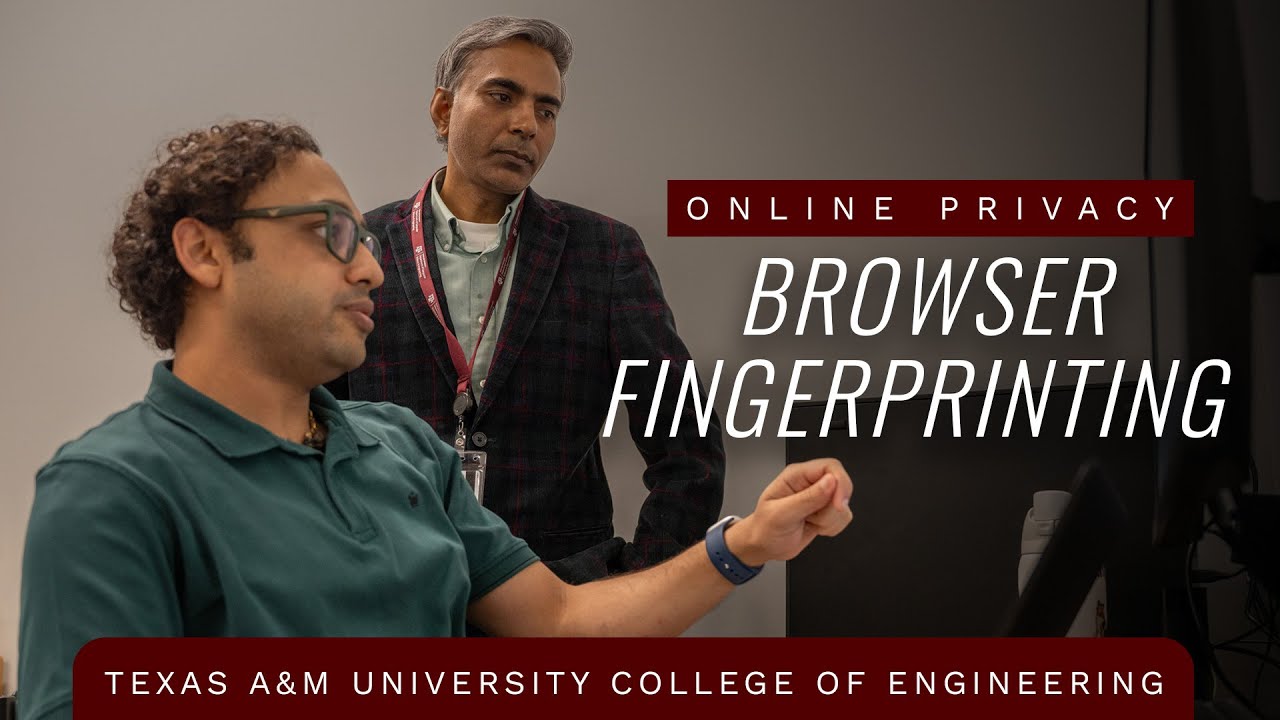
SPIES Lab Research Featured in TAMU College of Engineering Spotlight
The Texas A&M University College of Engineering highlighted SPIES Lab’s browser fingerprinting research, emphasizing how websites are stealthily using browser fingerprinting to track users online. The study shows that clearing cookies provides a false sense of security, as websites link unique device signatures to advertising behavior in real time to track users invisibly. To combat this, we developed the FPTrace framework that exposes fingerprint-based tracking practices even under current privacy regulations like GDPR and CCPA.
Links:
1. YouTube
2. TAMU College of Engineering (LinkedIn Post)
Paper accepted to IJCNLP-AACL 2025
- LiteLMGuard: Seamless and Lightweight On-Device Guardrails for Small Language Models against Quantization Vulnerabilities
Kalyan Nakka, Jimmy Dani, Ausmit Mondal, Nitesh Saxena
In the International Joint Conference on Natural Language Processing & Asia-Pacific Chapter of the Association for Computational Linguistics (IJCNLP-AACL) Findings, December 2025
[pdf]
TAMU SPIES Lab Wins CCS 2025 Distinguished Paper Award!
We are delighted to share that our paper, “Harnessing Vital Sign Vibration Harmonics for Effortless and Inbuilt XR User Authentication,” has received the Distinguished Paper Award at the ACM Conference on Computer and Communications Security (CCS) 2025.

This recognition highlights the impact and innovation of our collaborative work, which introduces a novel authentication mechanism leveraging vibration harmonics derived from users’ vital signs within extended reality (XR) systems to enable continuous, effortless, and built-in user verification.
The acceptance rate for CCS 2025 was 13.9% (316 accepted out of 2,278 submissions), and only about 1% of all submitted papers received a Distinguished Paper Award.
Congratulations to the entire team for this outstanding achievement!
#ACMCCS2025 #CyberSecurity #XR #Authentication